
- Blog
- Addressability
- Agencies
- Agentic advertising
- AI
- Publishers
Trends from this Fall’s Event Season
Over the past few weeks, the Permutive team has been busy attending, speaking, and hosting events. We've had a front-row seat to conversations on where the industry is headed and here is what we heard most often this fall event season.

Written by
The Permutive Team
Over the past few weeks, the Permutive team has been busy attending, speaking, and hosting events. From our own summits in London and New York to Advertising Week and Prebid Summit, we’ve had a front-row seat to conversations on where the industry is headed. Here is what we heard most often this fall event season.
Addressability is back
When Google reversed course on third-party cookies, many in the industry assumed addressability was a conversation we’d left behind, but it has once again become a theme across the industry. It came up on the sidelines of Advertising Week and was a headline concern at Prebid Summit, where speakers suggested it will be a recurring topic at industry gatherings for years to come.
Cookie drop-off, ATT, and programmatic dynamics have all chipped away leaving programmatic addressability around 30%. The recent platform announcement has brought this key issue back into the spotlight. Buyers are exploring direct connections to publishers and the first-party signals they hold as a way to close the gap.
AI has moved from hype to moving real money
For the past few years, the conversation around AI has focused on what’s possible. This fall, it shifted to what’s making an impact now. At Prebid Summit, our fireside chat with Future’s Jamie Samuel explored how AI has already influenced hundreds of millions of dollars in ad spend, and how publisher platforms are starting to look much more like the walled-garden tools advertisers already know.
Publishers are already putting AI to work on the tasks that used to take up their teams’ time. We’ve seen more than 150 publishers using AI agents to discover new audiences in their own data, turn a buyer’s brief into a plan, adjust targeting while a campaign is live, and report performance back to buyers during and after a campaign.
Not everyone was bullish, though. Digiday reported that LUMA’s Terry Kawaja told the Prebid Summit audience that buyers are hesitant to invest because it’s hard to know which capabilities will last and which the next version of a general-purpose AI model will simply absorb. Workflow automation alone won’t be a differentiator, and pairing strong decision-making with unique signals is what will separate the winners from the losers. That’s where publishers have an edge, as their AI tools are only as good as the first-party data underneath them, and that data is something general-purpose models can’t replicate.
Agencies are building their own operating systems
The biggest structural shift we heard about is happening behind the scenes.
As the market moves towards outcomes, agencies are feeling that pressure. Clients are less willing to fund the traditional headcount model, so agencies are increasingly expected to make their money on the budgets they trade and the outcomes they drive. To run more spend with more automation, holding companies and independents are building their own operating systems. Meanwhile, publishers have been centralizing their data and decision-making in much the same way.
There has been some friction in the space between the two, as much of today’s programmatic supply chain wasn’t built to carry publisher signals. By the time a bid request reaches a buyer’s platform, a rich picture of the reader is often reduced to an IP address, a location, and a time of day. ID-based connections through clean rooms and data onboarding often match fewer than 30% of users, so audiences built inside an agency’s system shrink once they’re activated. On top of that, layers of ad-tech and data fees eat into the working media that drives results for clients.
But agencies and publishers are starting to come together. They face the same addressability gap and fee pressure, and both see more direct connections as the way forward. Early tests shared at our New York and London Summits suggest the upside is significant. When buyers connected more directly to publisher signals, the number of impressions available to them grew. As these connections scale, more of the spend currently flowing to the long tail and walled gardens has a real path back to premium publishers.
Looking ahead
Addressability, AI, and agency operating systems can sound like separate conversations, but they are all connected. Signal loss is the problem, publishers’ first-party data is the asset, AI is changing how both sides do the work, and more direct connections between buyers and sellers are what turn it into results.
Thank you to everyone who joined us, met us, and spoke alongside us at Advertising Week New York, Prebid Summit, our London and New York Summits, and the many other events this season. If you’d like to continue the conversation on how these trends impact your business, get in touch.
You may be interested in
Protected: Beyond Transactions: How AI Has Reshaped Publisher Monetization
Learn MorePermutive earns five G2 badges, including its first Easiest Admin
Learn MoreKeep going, there's more to uncover.
Protected: Beyond Transactions: How AI Has Reshaped Publisher Monetization
There is no excerpt because this is a protected post.
Trends from this Fall’s Event Season
Over the past few weeks, the Permutive team has been busy attending, speaking, and hosting events. We've had a front-row seat to conversations on where the industry is headed and here is what we heard most often this fall event season.
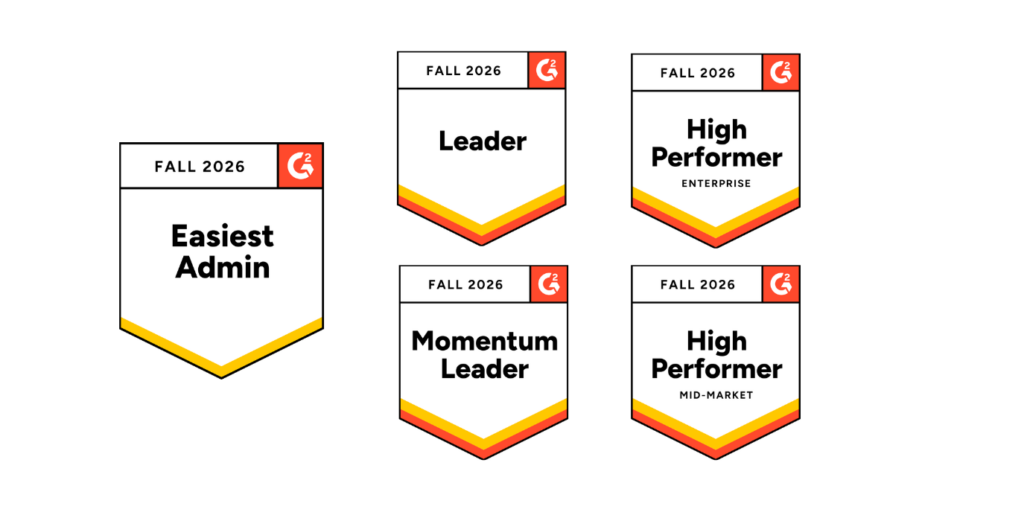
Permutive earns five G2 badges, including its first Easiest Admin
Permutive has earned five badges in the G2 Fall 2026 Report, including our first-ever Easiest Admin badge alongside DMP Leader and Momentum Leader. Here's what our users said.

Permutive Taps Former LiveRamp Exec David Rifkin to Help Agencies Navigate the Next Era of Addressability
Programmatic pioneer to help ad buyers solve addressability and data challenges while improving campaign performance amid agentic adoption.
TransUnion and Permutive partner to expand addressable reach and improve advertising performance across the open internet
Permutive delivers expanded TransUnion audience reach.
Beet Retreat Berkshires Recap
For three days last month, over one hundred senior media, agency, and ad-tech executives traded Zoom for upstate New York at Beet Retreat Berkshires. It has become one of the industry’s most closely watched off-the-record gatherings with a mix of fireside chats, curated panels, and roundtable breakouts. This year’s agenda was built around the idea of an “Outcome Economy” and brought together industry voices to debate how AI, commerce media, CTV, and identity are rebuilding the advertising ecosystem in real time. We were in attendance and led two sessions, so here are the themes that…